Gear Ratio Calculator
See engine rpm at any speed for your axle ratio, gear and tire size, and the axle ratio that gets back factory performance after you fit bigger tires.
Gear ratio calculator
| Current tire | New tire | |
|---|---|---|
| Tire height | 31.6 in | 35.0 in |
| Engine rpm at 65 mph | 2454 | 2216 |
| Real speed at an indicated 65 mph | 65 mph | 72.0 mph |
To get back the same engine speed on 35x12.5R17, you need about 3.93:1.The closest common ring and pinion is 3.92:1. Check which ratios are made for your axle.
Regear chart for bigger tires
Starting from a 265/70R17 (31.6 in) factory tire, the axle ratio that gives the same engine speed on each larger tire, for three common factory ratios.
| New tire | Height | From 3.21 | From 3.55 | From 3.73 |
|---|---|---|---|---|
| 31 in (265/75R16) | 31.6 in | 3.21 | 3.55 | 3.74 |
| 33 in (285/75R16) | 32.8 in | 3.33 | 3.69 | 3.87 |
| 35 in (315/75R16) | 34.6 in | 3.51 | 3.89 | 4.08 |
| 37 in (37x12.50R17) | 37.0 in | 3.76 | 4.16 | 4.37 |
Pick the nearest ratio made for your axle. Many people choose the next ratio up to make up for the extra weight of bigger tires.
Gear ratio and rpm formulas
Engine rpm
rpm = mph x axle ratio x transmission ratio x 336 / tire height in inches.
Speed at an rpm
mph = rpm x tire height / (axle ratio x transmission ratio x 336).
Regear after a tire change
new ratio = old ratio x new tire height / old tire height.
Real speed after a tire change
real mph = speedometer mph x new tire height / old tire height.
Bigger tires that call for a regear
A jump from stock tires to 33s or 35s, like this AI sample, usually needs new gears to keep the truck from feeling slow.
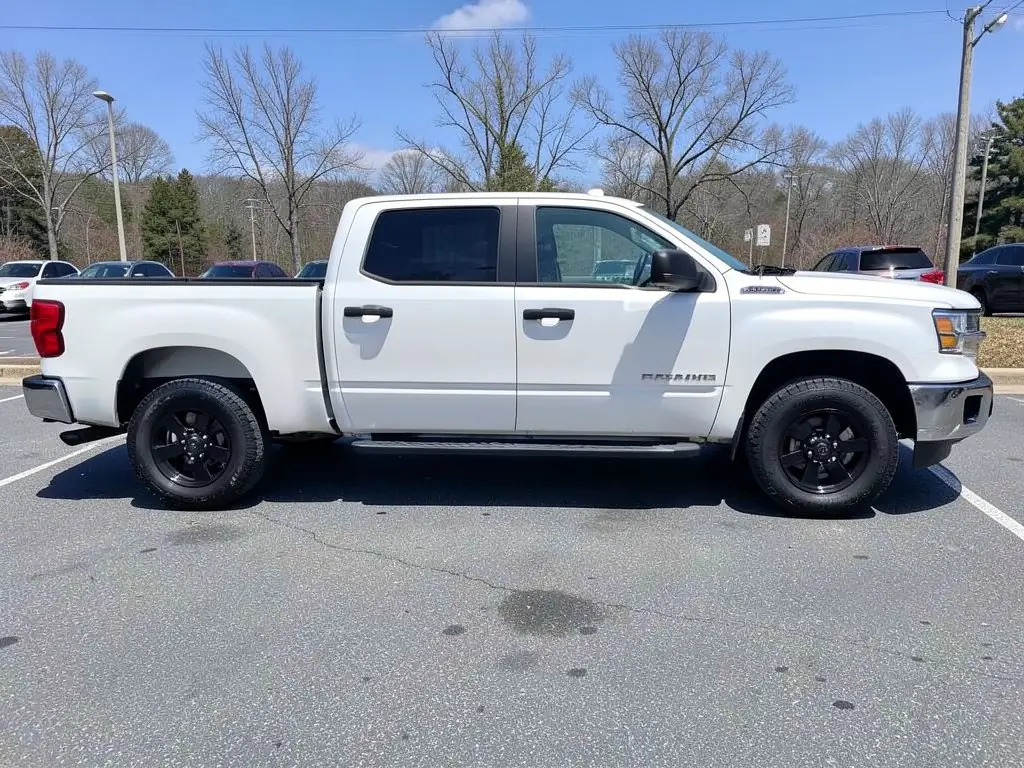
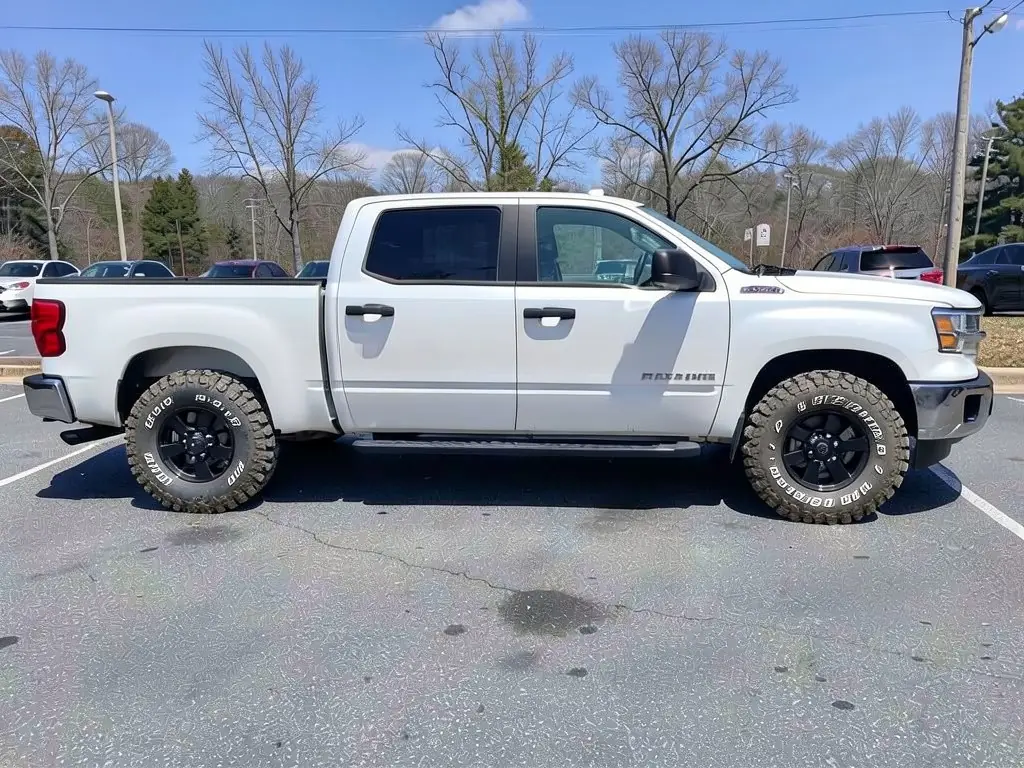
The example images are AI-generated samples made with our own image model, not photos of real customer vehicles, and they are not measured fitments.
Frequently asked questions
How do you calculate rpm from gear ratio and tire size?
RPM = mph x axle ratio x transmission ratio x 336 / tire diameter in inches. With 3.55 gears, a 1.00 top gear and 31.6 in tires at 65 mph: 65 x 3.55 x 1 x 336 / 31.6 = about 2,450 rpm.
What gear ratio do I need for bigger tires?
Multiply your current axle ratio by the new tire height divided by the old one. Going from 31.6 in to 35 in tires on 3.55 gears: 3.55 x 35 / 31.6 = 3.93, so 3.92 or 4.10 gears bring the feel back.
Is a higher or lower gear ratio better for towing?
A numerically higher ratio, like 4.10 instead of 3.55, turns the engine faster for each turn of the wheels. That gives more pulling power and better acceleration, at the cost of higher rpm and fuel use on the highway.
Do bigger tires change my gear ratio?
They change the effective ratio. A taller tire covers more ground per turn, which feels like a taller (lower numbered) gear: slower acceleration, lower highway rpm and a speedometer that reads slow.
What is the transmission gear ratio?
The ratio of the gear you are in. Many automatic transmissions have a direct gear of 1.00 and one or more overdrive gears below 1.00, like 0.67. Your owner's manual or a transmission spec sheet lists them.
See the bigger tires before you buy
The Tire Visualizer puts taller all-terrain or mud-terrain tires on a photo of your truck.
See bigger tires on your truckThe calculators on this page are free to use. The AI visualizer needs a sign-in: most new accounts get 5 free credits (valid 30 days); a standard render uses 1 credit, and free renders carry a WheelAI watermark.
Also try: Tire Visualizer · Tire Size Calculator · Tire Size Comparison · Tire Size Chart · Tire Size Converter · How to Read Tire Size · Wheel Offset Calculator · Bolt Pattern Finder · Tire Speed Rating Chart · Tire Load Index Chart · Tire Date Code