Wheel Offset Calculator
Type your current wheel and the one you want. You see how far the outer face moves toward the fender, how far the inner lip moves toward the suspension, and the backspacing of both.
Wheel offset calculator
Result: 17x9.0 +35 mm vs 17x8.0 +44 mm
- Outer face (poke): 22 mm (0.85 in) further out toward the fender
- Inner lip: 4 mm (0.15 in) closer to the suspension
- Backspacing: 6.23 in now, 6.38 in new (+0.15 in)
The outer face sits more than 10 mm further out. Check fender clearance at full steering lock and with the suspension compressed.
Backspacing assumes 0.5 in of rim flange on each side, the common figure wheel sellers use. Tire bulge, brake caliper shape and suspension travel are not included.
Offset to backspacing converter
9.0 in wide at -12 mm = 4.53 in backspacing
9.0 in wide with 4.50 in backspacing = -13 mm offset
How to use the wheel offset calculator
- 1
Enter your current wheel
Diameter, width and offset are on the back of the wheel or in the owner's manual. A stock Honda Accord wheel, for example, is often 17x7.5 +45.
- 2
Enter the wheel you are looking at
Use the size and offset from the seller's listing, for example 17x8.5 +35.
- 3
Read the two moves
Outer face tells you how much closer the wheel gets to the fender lip. Inner lip tells you how much closer it gets to the strut, spring or control arm.
Positive, zero and negative offset
Offset (also written ET, from the German Einpresstiefe) is the gap between the center of the wheel barrel and the hub mounting face. Most front-wheel-drive cars and crossovers use high positive offsets, around +35 to +50 mm, so the wheel tucks inside the fender. Lifted trucks often run zero or negative offsets so the wheels push out past the body.
| Offset | Where the mounting face is | What it does | Typical use |
|---|---|---|---|
| Positive (+) | Toward the outside of the wheel | Wheel sits further in | Most cars, crossovers and stock trucks |
| Zero (0) | At the centerline | Wheel is centered on the hub face | Some trucks and older rear-drive cars |
| Negative (-) | Toward the inside of the wheel | Wheel pokes out further | Lifted trucks, off-road and deep-dish wheels |
Wheel offset examples
These pairs show what a lower offset looks like from behind: the same vehicle before, then with wheels that push out toward the fenders.
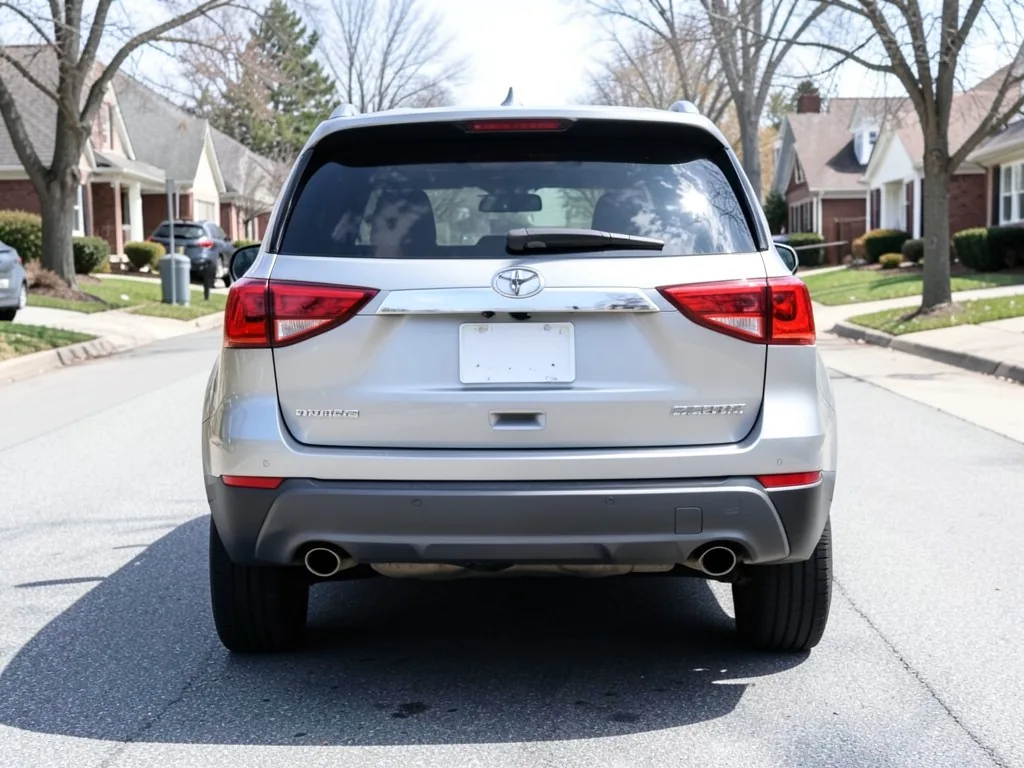
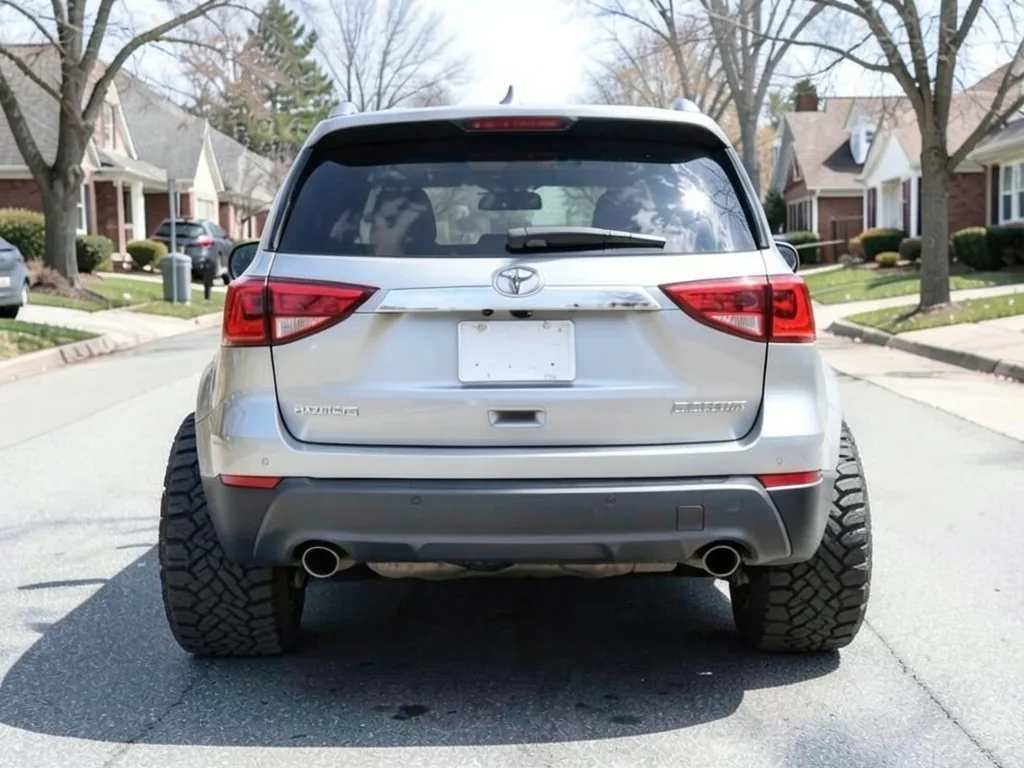
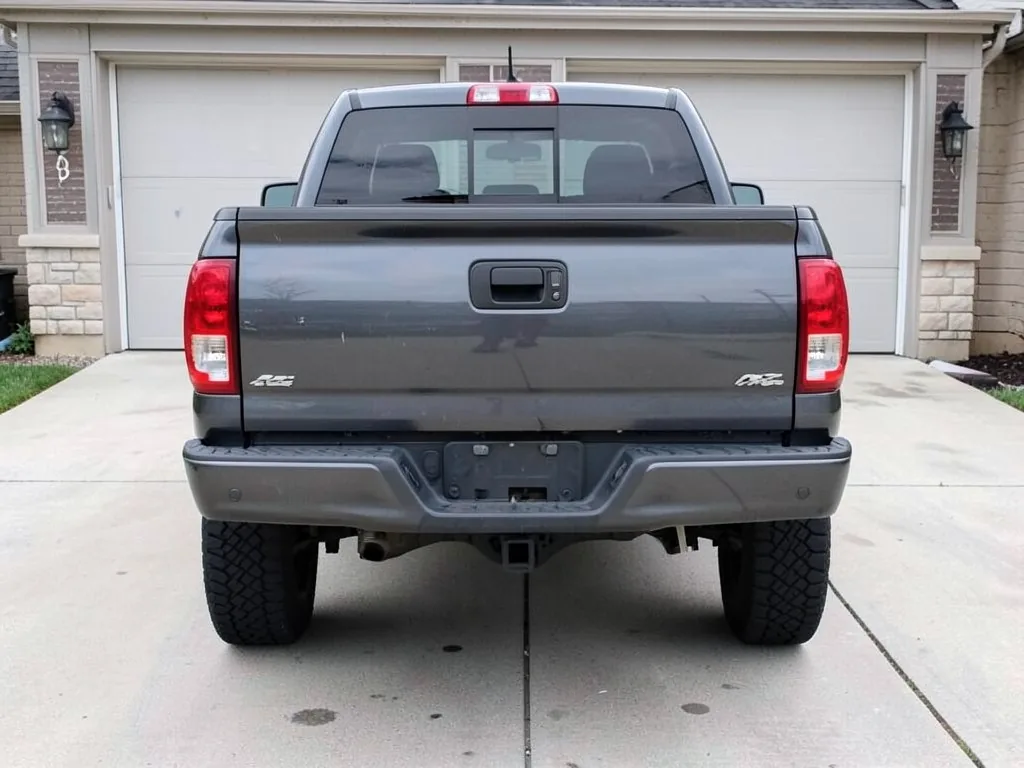
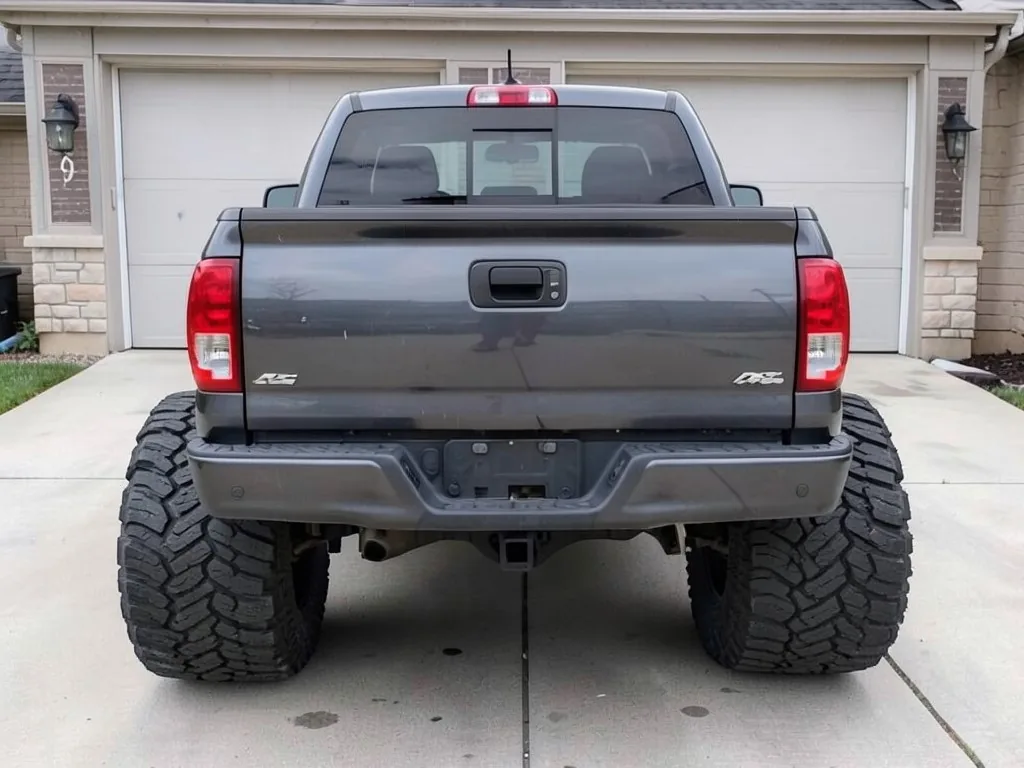
The example images are AI-generated samples made with our own image model, not photos of real customer vehicles, and they are not measured fitments.
Common offset changes and what they do
| Change | Outer face moves | Inner lip moves |
|---|---|---|
| 17x8 +45 to 17x8 +35 | 10 mm out | 10 mm away from suspension |
| 18x8 +45 to 18x9 +35 | 22.7 mm out | 2.7 mm closer to suspension |
| 17x8 +0 to 17x9 -12 (truck) | 24.7 mm out | 0.7 mm closer to suspension |
| 20x9 +18 to 20x10 -18 (truck) | 48.7 mm out | 23.3 mm away from suspension |
Width change is split evenly: 1 in wider adds 12.7 mm on each side before the offset change is applied.
How to measure wheel offset yourself
- 1
Lay the wheel face down
Put a straight edge across the back of the wheel, lip to lip.
- 2
Measure backspacing
Measure from the straight edge down to the mounting face. That is the backspacing.
- 3
Measure the overall width
Measure lip to lip across the wheel. It is about 1 in more than the size on the label (a 9 in wheel is about 10 in overall).
- 4
Work out the offset
Offset = backspacing minus half the overall width, times 25.4 for millimeters. Or type the numbers into the converter above.
Frequently asked questions
What is wheel offset?
Offset is the distance in millimeters from the wheel's centerline to its mounting face, the flat part that bolts to the hub. Positive offset puts the mounting face toward the outside of the wheel, so the wheel sits further in. Negative offset puts it toward the inside, so the wheel sticks out further.
Does a lower offset push the wheel out?
Yes. With the same width, every millimeter less offset moves the whole wheel 1 mm further out. Going from +44 to +35 on the same width moves both lips 9 mm outward.
What happens when the new wheel is wider?
Extra width is split between both sides. A wheel 1 inch wider at the same offset sits about half an inch (12.7 mm) further out and half an inch further in. The calculator adds the width change and the offset change together for each side.
What is the difference between offset and backspacing?
Offset is measured from the centerline in millimeters. Backspacing is measured from the mounting face to the inner edge of the wheel, usually in inches. Truck and off-road wheel sellers often list backspacing; car wheels are usually sold by offset.
How do I find my current wheel offset?
It is usually cast or stamped on the back of a spoke or inside the barrel, written as ET followed by a number (ET45 means +45 mm), or as a plain number with + or -. The owner's manual or a dealer can also give the factory offset.
How much poke is too much?
It depends on fender space, tire size and suspension travel. Many cars take 5 to 10 mm without problems; beyond that check clearance with the steering at full lock and the suspension compressed. Some states also require the tire tread to be covered by the fender.
See the new offset on your own car
Numbers tell you if it fits. Our Wheel Offset Visualizer shows how flush, poke or tucked wheels will look on a photo of your car.
See the offset on your carThe calculators on this page are free to use. The AI visualizer needs a sign-in: most new accounts get 5 free credits (valid 30 days); a standard render uses 1 credit, and free renders carry a WheelAI watermark.
Also try: Wheel Offset Visualizer · Wheel Spacers Visualizer · Rim Visualizer · Tire Size Calculator · Tire Size Comparison · Tire Size Chart · Tire Size Converter · How to Read Tire Size · Bolt Pattern Finder · Gear Ratio Calculator · Tire Speed Rating Chart · Tire Load Index Chart · Tire Date Code