How to Check Tire Pressure
Type the pressure on your door placard and what each tire reads. The helper tells you how much air to add, and the steps below show how to take a good reading.
Tire pressure check helper
- Front left: Add about 2 psi.
- Front right: Good. No change needed.
- Rear left: Add about 4 psi.
- Rear right: Good. No change needed.
How to check tire pressure in 5 steps
- 1
Check when the tires are cold
First thing in the morning, or after the car has been parked for about three hours.
- 2
Find your pressure
Read the placard on the driver door jamb. It lists front and rear cold pressures for your car with the tires it came with.
- 3
Remove the valve cap
Unscrew the small cap on the valve stem and keep it somewhere you will not lose it.
- 4
Press the gauge on firmly
Push the gauge straight onto the valve until the hissing stops, then read the number. If it keeps hissing, re-seat it and read again.
- 5
Add air and re-check
Add air in short bursts and check again until you reach the placard number, then refit the cap. Do all four, plus the spare if it has air.
Where to find the right tire pressure
| Number | Where it is | What it means |
|---|---|---|
| Recommended cold pressure | Placard on the driver door jamb, sometimes the glovebox or fuel door | The pressure to run for your car, its load and its original tire size |
| Maximum pressure | Small print on the tire sidewall | The most the tire is built to hold, not a target |
| Owner's manual figure | Tires section of the manual | Same as the placard, sometimes with a higher figure for full loads or towing |
If you fitted a different tire type, such as light-truck (LT) tires, the tire seller or the tire maker's load table gives the pressure for your load.
Hot vs cold tire pressure
A tire reads about 2 to 4 psi higher after 20 minutes of driving, and about 1 psi lower for every 10°F the air temperature drops. That is why the placard gives a cold pressure, and why a reading taken at a gas station after a drive can hide a low tire.
- Checked hot and the reading is at or above the placard: do not let air out. Check again cold.
- Checked hot and the reading is below the placard: add air to the placard, then re-check when cold. That tire is lower than it reads.
- Moving from summer into winter: expect to add a few psi as the weather cools.
Bigger tires change the numbers
If you move to taller off-road tires like the ones in this AI sample, the door placard no longer applies to them. Ask the tire seller for the pressure that carries your truck's weight.
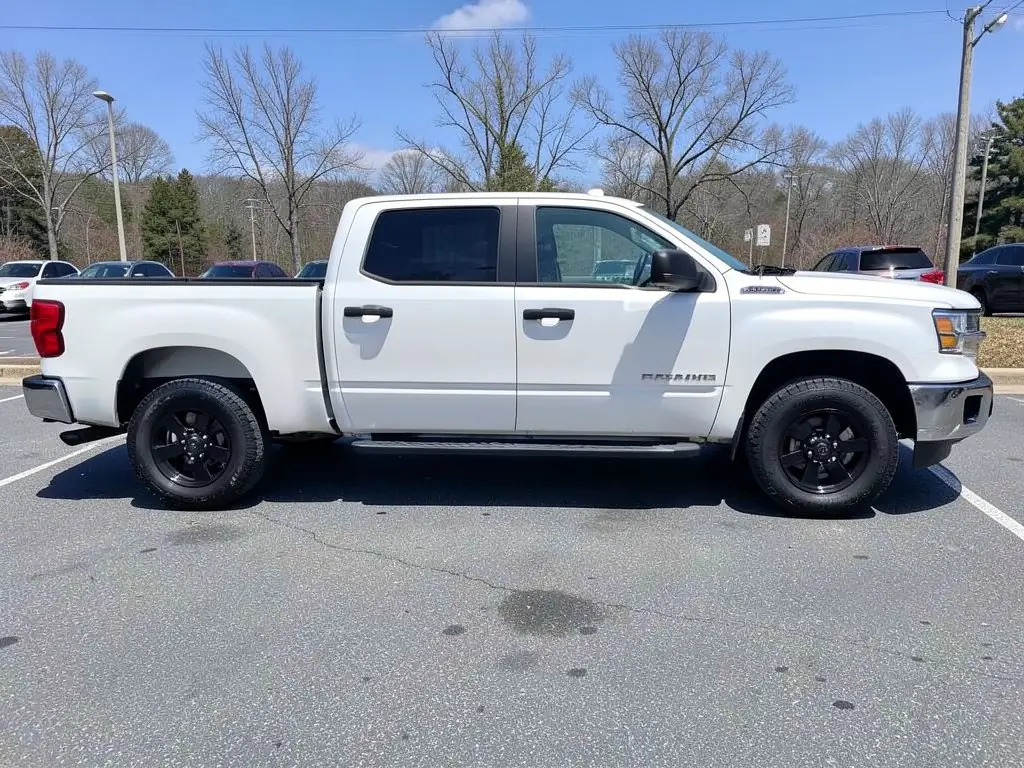
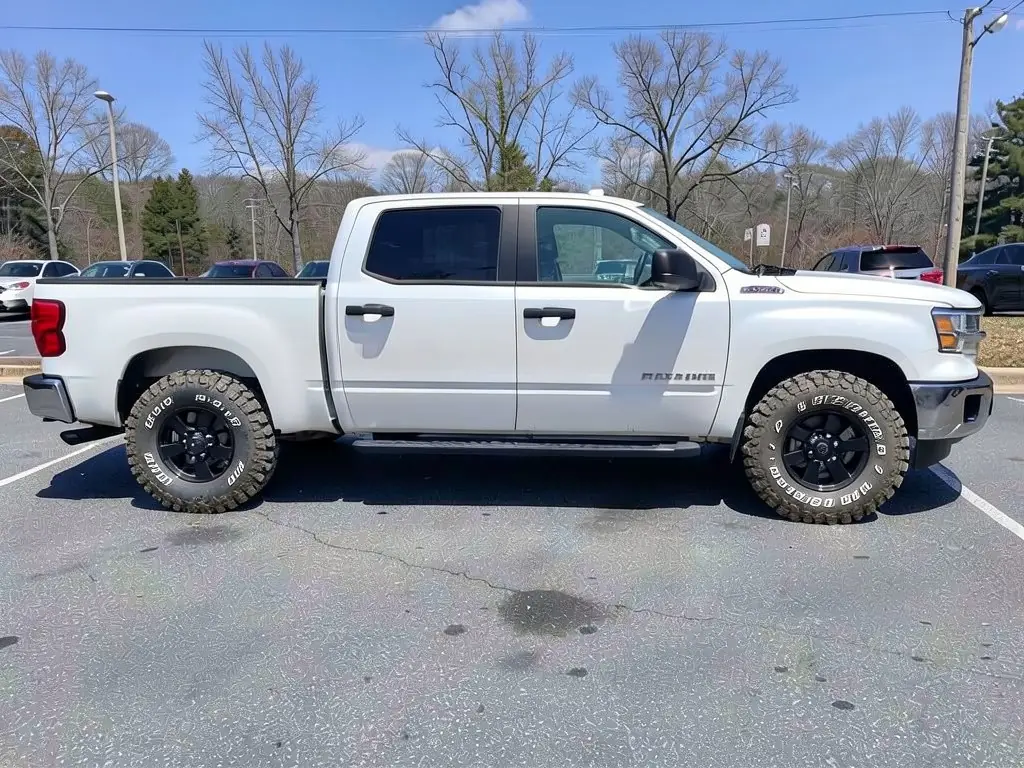
The example images are AI-generated samples made with our own image model, not photos of real customer vehicles, and they are not measured fitments.
Frequently asked questions
What should my tire pressure be?
Use the pressure on the placard on the driver door jamb (some cars put it in the glovebox or fuel door). Most cars list 30 to 36 psi; trucks and SUVs can list more, and the front and rear can differ. The number on the tire sidewall is the maximum, not the right pressure.
Should I check tire pressure hot or cold?
Cold: before driving, or after the car has been parked for about three hours. Driving warms the tires and raises the reading by a few psi, so a hot reading looks better than the tire really is.
How often should I check tire pressure?
Once a month and before a long trip or a heavy load. Tires lose about 1 psi a month through the rubber even with no leak, and about 1 psi for every 10°F drop in temperature.
Can I check tire pressure without a gauge?
Not reliably. A tire can be 25% low and still look normal. Gauges are cheap, and most gas station air pumps and portable inflators have one built in, though a separate gauge is more consistent.
Should I let air out of hot tires?
No. Hot tires read high because the air has expanded. If you let air out, they will be low once they cool. Wait until they are cold and set them to the placard.
Sources
The checking steps follow the US safety agency's tire guidance.
Shopping for new tires?
The Tire Visualizer shows new all-terrain or mud-terrain tires on a photo of your own vehicle.
See new tires on your carThe calculators on this page are free to use. The AI visualizer needs a sign-in: most new accounts get 5 free credits (valid 30 days); a standard render uses 1 credit, and free renders carry a WheelAI watermark.
Also try: Tire Pressure Light · Tire Size Calculator · Tire Size Comparison · Tire Size Chart · Tire Size Converter · How to Read Tire Size · Wheel Offset Calculator · Bolt Pattern Finder · Gear Ratio Calculator · Tire Speed Rating Chart · Tire Load Index Chart · Tire Date Code